What is Surgical Orthodontics?
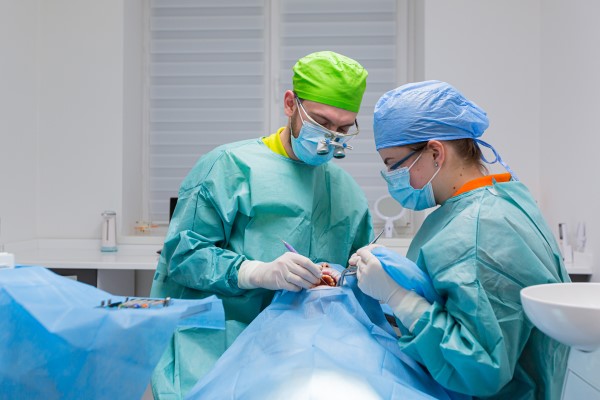
Surgical orthodontics is a branch of dentistry that uses surgical appliances to correct irregularities in the teeth and jaw. While orthodontic treatment often involves braces to correct misalignment, it can also be complete without any hardware instruments or medications. It is important to note that surgical orthodontic treatment requires anesthesia for patients and should only be performed by an experienced professional.
What is surgical orthodontics used for?
Surgical orthodontics treats a variety of dental problems such as protruding, irregularly shaped teeth and jaws, overcrowding, and underbites. Tooth crowding occurs when there is not enough room in the mouth for all the teeth, causing them to grow into each other or toward the back of the jaw. Underbites, also known as malocclusions, occur when a person's top and bottom teeth do not meet perfectly. As a result, the teeth may grow out to the side or overlap when biting down.
Types of surgical orthodontics
Several different types of surgical orthodontics are available. Our team can discuss the kind of procedure they recommend. Sometimes, we focus on shifting the upper or lower jaw. For example, we might restructure the chin or add bone to the jaw. These surgeries adjust the shape and position of the jawbone.
In other cases, patients may also need temporomandibular joint (TMJ) surgery. This surgery targets the sliding hinge, allowing the lower jaw to move freely. TMJ problems are often linked to jaw deformities. Patients can develop crooked teeth, uneven wear, and dental decay without treatment.
Our team can determine whether you need TMJ surgery and if the procedure is right for you. Some TMJ procedures are minimally invasive, with a short recovery time. Since other procedures require open surgery, we can help you explore the options.
Is surgical orthodontics right for you?
Surgical orthodontics might be right for patients struggling with overcrowding or an underbite and would like to correct it. If the teeth are growing out of position due to injury or infection, they can be moved back into place by an orthodontist skilled in orthodontic surgery. Surgical orthodontic treatment is usually performed on older patients, but young people are not disqualified. If the orthodontist determines that orthodontic surgery is necessary to correct a dental issue, then the patient should not be discouraged by age.
Who can benefit from surgery?
Orthodontics can be beneficial to almost anyone with overcrowding or underbite. However, patients must realize that there are risks associated with this type of treatment, and they should not attempt to correct their dental problems alone. Surgery may also not be advisable for children and teenagers unless the problem results from an injury. In that case, surgery can help correct any damage to the jaw or teeth.
What are the risks of surgical orthodontics?
There may be risks associated with surgical procedures, which is why they should only be performed by an orthodontist skilled in the field. Surgery can result in infection or damage to another set of teeth or bones and problems with blood circulation and nerve function. Patients should inform their doctor if they have dental implants, gum disease, heart disease, high blood pressure, or autoimmune diseases such as Lupus before undergoing any orthodontic surgery.
As with any medical treatment, there are risks associated with the procedure. Common side effects and complications include:
- Excessive bleeding
- Damage to existing teeth, gums, or bones
- Infection
- Nerve damage
- Damage to salivary glands
- Bruising and swelling
Surgical orthodontics is an effective way of correcting dental issues that cannot be remedied by wearing braces alone. Orthodontic surgery can treat overcrowding, underbites, and teeth growing out of position. The surgery does have risks and should only be performed by an experienced professional. Talk to your orthodontist if you believe that orthodontic surgery is the right course of treatment for you.
Find out more
If you are interested or want to learn more about surgical orthodontics, contact our office at (469) 525-2813, and we can schedule a consultation. Prior to any dental or orthodontic treatment, we will first determine whether you are a good candidate for this procedure and discuss all of the advantages and disadvantages of undergoing treatment. Our team is equipped to offer surgical orthodontic procedures for many patients and can offer alternative orthodontic treatments if necessary. We look forward to hearing from you!
Request an appointment here: https://www.pricefamilyortho.com or call Price Family Orthodontics at (469) 525-2813 for an appointment in our Frisco office.
Check out what others are saying about our services on Yelp: Read our Yelp reviews.
Related Posts
Orthodontics typically involves wearing oral appliances like braces or clear aligners in order to straighten teeth. These devices work by constantly pushing on the wearer’s teeth, moving them to more desirable positions over time.Teeth misalignment can lead to a less aesthetically pleasing smile and a variety of oral issues, like gum disease. Getting appropriate treatment…
Orthodontics can help address issues with your bite and provide a variety of benefits, like improved oral hygiene, improved speech, and an improved smile. Orthodontics works best when patients are around the ages of 9 to 14. At this point, the jaw and facial structures are still developing, but most of the permanent teeth should…
Orthodontics can get you straighter teeth over 12 to 36 months, but treatment can put your teeth at an increased risk of developing tooth decay. Your risk of gum disease also goes up during treatment. This is due to the nature of the appliances used for orthodontics.Braces come with the highest risk of tooth decay.…
Orthodontics can fix almost all teeth alignment issues. Poorly aligned teeth can ruin the way that your smile looks, and they can also leave you more vulnerable to a variety of oral issues, like tooth decay and gum disease, because it is harder to remove plaque from teeth surfaces.Improperly aligned teeth can also make simple…