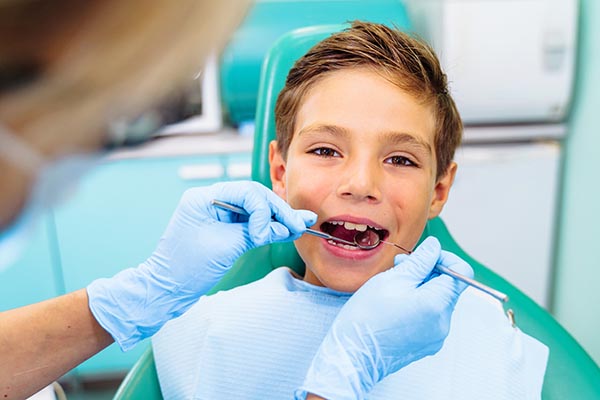
 The American Association of Orthodontists recommends bringing your child to an orthodontist for a bite evaluation before they reach seven. Early detection of issues with the alignment of a child’s teeth or jaw makes it easier to correct them. The child’s jaw and facial structures are still developing at this point, making it easier to manipulate them with orthodontic appliances.
Frequently asked questions about how an orthodontist deals with children with bite issues
Let us take a look at the answers to some of the questions you might have about the importance of getting your child to an orthodontist early on:
1. When is the ideal age to bring the child in for an evaluation?
Children should have gone in for their first orthodontic evaluation by the time they reach age seven. At this point, their bite should be developed enough to notice any abnormalities. The severity of any issues detected often determines if treatment proceeds immediately. In some cases, the orthodontist might opt to wait until the child reaches their teenage years before starting treatments.
2. What are the commonly recommended treatments for children?
The type of orthodontic issues the child is dealing with and their severity often determines how an orthodontist addresses them. One of the most common orthodontic issues children develop is overcrowding caused by the premature loss of baby teeth. Crowding can also be caused by the child’s jaw not being wide enough for all their teeth.
Appliances like space maintainers can be used to preserve the space left by prematurely lost baby teeth, preventing alignment issues that could be caused by it. Devices like expanders can be used to push the child’s palate outward, creating more space on their jaw for their teeth.
Braces might be the most commonly used orthodontic device for children. Clear aligners can be used to treat many of the issues addressed with braces, but children often aren’t responsible enough to keep up with them until they reach their teenage years.
3. How long do orthodontic treatments last?
Most orthodontic issues can be fixed within 12 to 36 months. The more severe the child’s orthodontic issues are, the longer they will have to put up with an appliance. Straightening a child’s teeth is a process that must be done gradually and gently. Trying to shorten treatment times by putting excessive forces on a patient’s teeth can damage teeth roots.
4. Do orthodontic treatments typically involve using a retainer?
Yes, retainers ensure the patient’s teeth stay in their new position. Moving a person’s teeth to an improved alignment is only half of the equation. Their teeth still need time to bond with bone structures in their new position, so it becomes their permanent alignment. Most children only have to wear a retainer for a couple of years to complete their treatment.
We are here to help
Think your child has developed bite issues? Call or visit our Frisco clinic to schedule an appointment with our orthodontist.
Request an appointment or call Price Family Orthodontics at 972-528-5519 for an appointment in our Frisco office.
Related Posts
Everyone deserves a smile that makes them feel confident, and for many patients, braces are a way to achieve a more symmetric smile and address aesthetic concerns. This review provides answers to common questions about braces treatment. It should help you decide if braces treatment is right for you (or your child).It helps to have…
The two most popular and effective orthodontic treatments today are braces and clear aligners. Both are designed to straighten and correct misalignments but differ in design, approach, and effectiveness. Let us explore the key differences between these two appliances and their advantages.Braces are a tried and true orthodontic treatment method that has been used for…
Curious about braces? Read on to learn more about this type of teeth-straightening treatment. Braces have come a long way in recent years, becoming the gold standard for correcting malocclusions of the jaw and teeth.The system behind braces is simple: They work by exerting a small but constant force on the teeth over a long…